
Less Footprint. More Home.
Why the best renovation you’ll ever do might be smaller than you think
We see it constantly. Clients come to us with plans, budgets and ambitions - and almost every conversation starts the same way.
“We don’t want to overcapitalise.” “What will this add to the value?” “How do we make sure we get our money back?”
These are sensible questions. Nobody should ignore feasibility. But somewhere along the line, the conversation about why someone is building in the first place gets buried beneath spreadsheets and suburb medians.
Here’s what troubles us: if you’re about to spend several hundred thousand dollars transforming the place you live in, shouldn’t the primary goal be to actually enjoy living in it?

When Bigger Stopped Meaning Better
We’ve started chasing the dream based on the size of the build - not the quality of the home itself.
Too often we receive plans that simply don’t need to be as large as they are. Rooms that will rarely be used. Hallways that exist only because one space was placed too far from another. Square metres added not because they serve a purpose, but because “bigger” still feels like “better” in the property conversation.
The result? Budgets get stretched to cover the footprint, and the things that genuinely change how a house feels to live in get value-engineered out. The floor area stays. The liveability drops.
We’re talking about the details that actually matter day to day:
• High-performance insulation and airtightness
• Considered ventilation and air quality
• Quality joinery and fixtures
• Natural light and passive solar design
• A floor plan that actually works for how you live
These are rarely the things that blow out a budget. They’re the things that get cut to pay for the extra square metres.
A Different Question to Start With
What if higher-performing building methods, energy efficiency and the quality of the space itself sat at the front of the design process - not at the back of the budget?
What if the conversation started with “How do we want this home to feel every single day?” rather than “How much floor area can we fit on this block?”
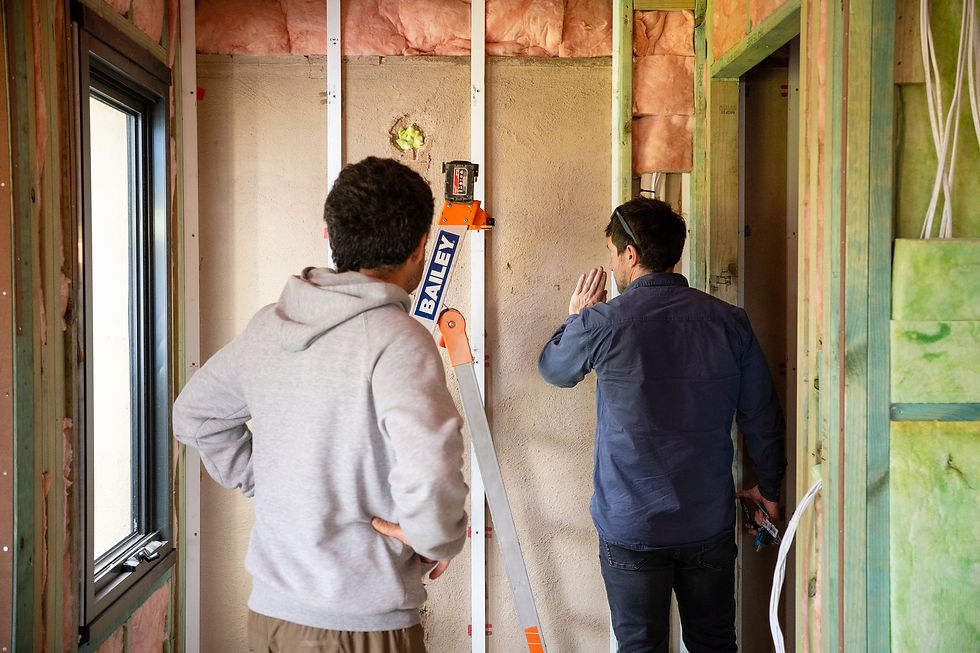
A smaller, beautifully designed home that’s properly sealed, efficiently heated and cooled, flooded with natural light and built with materials you can feel the quality of - that home will outperform an oversized, underinsulated sprawl every day of the week. In comfort, in running costs, and yes, in long-term value too.
This is particularly true in the Macedon Ranges, where the climate rewards homes that are tight, well-insulated and properly ventilated. A house that performs here - genuinely performs - is a house people want to live in year-round. That’s not just a liveability story. It’s a value story.
Budget Is the Strongest Argument for Building Smarter
Nobody is pretending budget doesn’t matter. It does. But budget is actually the strongest argument for building smarter rather than bigger.

The same dollar spent on a tighter building envelope, a better window or a well-resolved floor plan delivers more return - in liveability and in value - than that same dollar spent on another ten square metres of average.
Resale value isn’t something you engineer with square metres alone. It comes from homes that feel considered, that perform well, that cost less to run and that people genuinely want to live in.
The market is catching up. Buyers are smarter. Energy ratings matter more every year. And the homes that stand out are the ones where someone clearly cared about getting the design right - not just getting the slab as wide as the boundary would allow.
The Question Worth Asking Before You Build
So next time you’re looking at a set of plans, ask yourself the question that should have come first:
Is this the home I actually want to live in - or is it just the biggest home I can afford to build?
There’s a world of difference. And for homeowners in Kyneton, Woodend, Gisborne and across the Macedon Ranges, we’d love to help you find it.

Let’s Talk About What You Actually Want to Build
We work with clients across the Macedon Ranges who are renovating, extending and building new - and this conversation is one we genuinely love having early. Before the plans go too far. Before the budget gets carved up by floor area that doesn’t need to be there.
If you’re thinking about a project and you want an honest conversation about what will actually make your home better to live in, get in touch.


Comments